

In this story (7)
Color drenching means painting a room in one color, or close shades of it, across the walls, trim, doors and ceiling, and sometimes the vanity too. Instead of white trim drawing a line around every edge, the whole room becomes one soft, wrapped space.
It is on the rise: Pinterest's Spring 2026 trends report lists color drenching among the searches behind its micro-renovation trend (via Better Homes & Gardens). A small bathroom is the easiest room to try it in: not much wall, a weekend of work and a big change. Below is the paint method, then a renter version with no paint at all.
Why drenching works in a small bathroom
In a small room, contrast is what shows you the edges. White trim against colored walls outlines the door, the window and the ceiling line, which tells your eye exactly how tight the space is. When walls, trim and ceiling share one color, those edges soften and the room reads as one continuous surface.
It won't add square feet, but it usually feels calmer and more finished. A mid-to-deep shade can also make a windowless bathroom feel cozy on purpose instead of dim by accident.
1. Choose a palette you can live inside
Pick a color you'd be happy to see on every surface, because you will. Three directions that work well in bathrooms:
Thinking green? It is the big color of 2027: see the 2027 colors of the year and how to choose green paint for your light.
- Cool blue. Pinterest Predicts 2026 names Cool Blue among its 2026 trends. In a bathroom, try a soft gray-blue or chalky sky blue for a calm, coastal feel, or a deeper denim if you have good daylight.
- Warm gray-blue with blush. Valspar's 2027 Color of the Year, Cottage Door, is described as a soft, grayed blue with warm undertones, and its palette pairs it with Apricot Blush, a muted, creamy pink. Drench the walls and trim in the blue and bring the blush in through one towel or a painted mirror frame.
- Sage or muted green. Not a trend pick, just a reliable one, like the bathroom in the photo above. Grayed greens flatter skin tones and warm wood.
Test it: paint two large sample boards or use peel-off samples. Tape one by the mirror and one up in a ceiling corner. Look at them in the morning, at night under the vanity light and with the door closed. Bathroom lighting is often cool and harsh, so a blue can look icier on the wall than on the chip.
2. Pick the right sheen for steam
Sheen matters more in a bathroom than in any other room. Steam and splashes break down flat paint, and mildew settles into it easily.
- Walls and ceiling: satin. It wipes clean and resists moisture, but it is soft enough that small wall flaws don't shine. Many paint lines offer a bathroom formula with added mildew resistance, which is worth it here.
- Trim, door and vanity: semi-gloss. It is tougher and easier to scrub. The same color one step glossier gives a quiet, tailored contrast without breaking the drench.
- Skip flat or matte on bathroom walls near a shower, unless the can says it is made for bathrooms.
Tonal option: if one color feels like too much, go tonal. Walls in your main shade, trim one step darker on the same paint strip, ceiling one step lighter. It still reads as drenched.
3. Prep and ventilation
Prep is what keeps bathroom paint from peeling within a year.
- Wash the walls with a degreasing cleaner, treat any mildew spots with a mildew remover, rinse and let everything dry for a day.
- Fill nail holes, then lightly sand glossy trim so the new paint grips.
- Prime patched spots, stains, and any trim you are changing to a very different color.
- Work top down: ceiling first, then walls, then trim, door and vanity.
- Re-caulk gaps around the tub and trim afterward with a mildew-resistant bathroom caulk.
- Ventilate during and after painting: run the exhaust fan, open a window if you have one, and follow the cure time on the can before long hot showers.
Going forward, run the fan during every shower and for a while after. If the fan is weak, a quick squeegee on the tile and leaving the door open help the room dry.
4. Match the textiles to the walls
The drench continues past the paint. Choose the shower curtain, towels and bath mat in the same color family, one or two shades lighter or darker than the walls. Exact matches can look flat; a small step apart looks intentional.
The three-tone textile rule: the shower curtain closest to the wall color (it is the biggest textile), towels one shade off, and the bath mat the deepest, since floors look best a little darker. Then add one accent, such as the blush from the Cottage Door palette, in a single hand towel.

Dynamene Blue Fabric Shower Curtain, Waffle Weave, 72x72, Moonlight Blue
A soft blue waffle-weave curtain that turns the biggest textile in the room into part of the drench.
Affiliate link · we may earn a commission

Popular Bath 3PC Towel Set Capri, Slate Blue
A slate blue cotton towel set that repeats a blue wall color one shade off.
Affiliate link · we may earn a commission
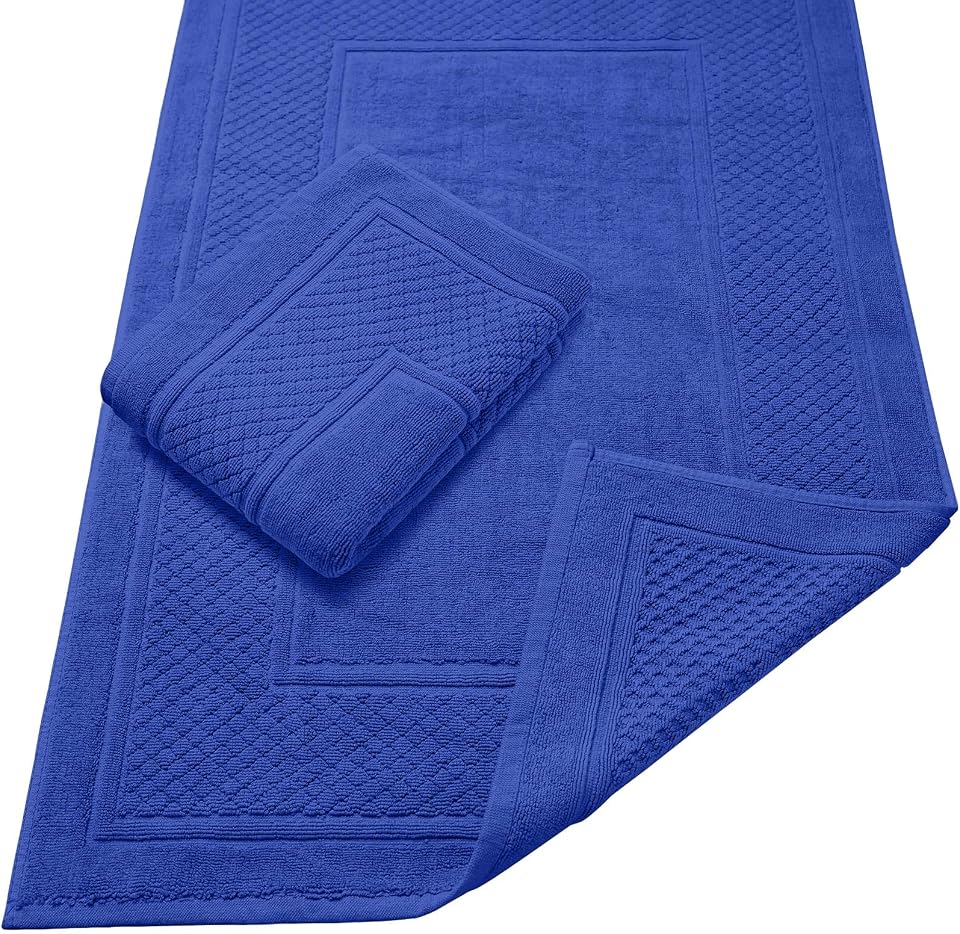
Avalon Towels Blue Bath Mat, 100% Cotton, Set of 2 (22x34 Inches)
Washable cotton bath mats that ground the blue palette on the floor.
Affiliate link · we may earn a commission
5. The renter version: drench without paint
If you can't paint, you can still get most of the effect by covering the biggest surfaces in one color family.
- Let textiles do the heavy lifting. In a small bathroom, the shower curtain can be the largest colored surface in the room. An extra-long curtain on a rod hung closer to the ceiling colors even more wall.
- Removable wallpaper on one wall. A solid matte peel-and-stick in your blue behind the toilet or vanity looks like paint from the doorway. Test a small piece in a hidden spot for a week or two first, keep it out of the shower and away from direct spray, and run the fan so steam doesn't lift the edges.

Micpolo 15.7" x 118" Blue Wallpaper Peel and Stick, Light Blue, Matte
A solid matte light blue removable wallpaper that colors a wall when you can't paint.
Affiliate link · we may earn a commission
- Paint what you own. A thrifted mirror frame, a small wooden stool or a tray can be painted your wall color. Your own things are not the landlord's walls.
- Match the small things. Soap dispenser, toothbrush cup, a lidded jar for cotton pads: three or four small pieces in the same tone pull the room together.
- Ask about paint anyway. Some landlords allow painting if you repaint the original color before you leave. Get it in writing.
The small-bathroom drench recipe
One main color on walls, trim and ceiling (satin walls and ceiling, semi-gloss trim) + textiles one or two shades away + one warm accent (blush, wood or brass) + warm 2700K to 3000K bulbs at the vanity.
Renters: shower curtain, towels, bath mat and one wall of removable wallpaper, all in one color family.
Common mistakes
- Choosing from a tiny chip. Color looks stronger on four walls and a ceiling. If you're unsure between two, the grayer one is usually safer.
- Flat paint near the shower. It marks, holds moisture and invites mildew.
- Skipping ventilation. Paint that never dries properly peels, whatever the sheen.
- Keeping the white trim "just this once." Those white outlines are exactly what drenching removes.
- Matching every textile exactly. One flat block of color looks unfinished. Vary shade and texture.
- Ignoring the bulbs. Cool daylight bulbs turn soft blues icy. Use warm white at the vanity.
- Wallpaper inside the shower. Peel-and-stick won't survive direct water.
Color drenching questions
What is color drenching?
Painting a room's walls, trim, doors and ceiling in one color, or close tones of it, sometimes including built-ins like the vanity. It replaces the usual contrast of white trim with one continuous color.
Does color drenching make a small room look bigger?
It doesn't change the size, but by removing contrast at the edges it often makes a small room feel calmer and less boxed in. Darker shades lean cozy; lighter shades lean airy.
What paint finish is best for a bathroom?
Satin for walls and ceiling, and semi-gloss for trim, doors and cabinets. Both handle moisture better than flat or matte, and a bathroom formula with mildew resistance helps in rooms with a shower.
Should I paint the bathroom ceiling the same color?
For a true drench, yes. If you worry it will feel low, go one shade lighter on the ceiling from the same paint strip.
Can renters color drench a bathroom?
Yes, mostly with textiles. Match the shower curtain, towels and bath mat, add a solid removable wallpaper on one wall and paint accessories you own. Ask your landlord before painting walls.
Find your palette
Not sure which color to drench in?
Take our style quiz to find the palette that suits your home, then browse more small bathroom ideas.
Start with sample boards and a weekend you can keep the fan running. Then explore more bathroom ideas or coastal style.
Was this story helpful?
Written by
Hemza
Founder & Editor
Founder of decorwithstyle. I style warm, lived-in rooms with natural wood, soft textiles and budget-friendly finds, and share the exact pieces behind every look.
More from HemzaKeep exploring