

In this story (8)
Green is having a moment. Almost every big paint brand has picked a green as its 2027 Color of the Year, from a pale yellow-green to a deep, confident shade. That is great news if you love green, and a little confusing when you are standing in front of a wall of chips.
The "best" green depends less on the trend and more on your room: which way the windows face and what undertone the green has. Here is how to choose green paint that looks right in your light, plus a renter version that uses no paint at all.
The 2027 greens, in plain words
- Sherwin-Williams Celery (SW 6421): a subtle, crisp yellow-green that the brand calls a "tinted neutral," somewhere between khaki, butter yellow and sage. Its yellow undertone gives it lift. Hunker notes that on walls it does best in rooms with plenty of natural light, and Sherwin-Williams suggests pairing it with natural wood.
- Benjamin Moore Webster Green (HC-130): a confident green with real depth and chroma. Benjamin Moore suggests it as an accent, in a living room or study, on kitchen cabinets or on a front door, and pairs it with White Down OC-131, a soft, warm off-white.
- Behr Grounded (T27-01): a mossy olive with brown undertones that Behr describes as a "living neutral." Behr lists its LRV as 11, so it reads dark on a wall.
- Dulux Soulful Sage: a soft, silvery, gray-tinged sage, chosen for its calm. Dulux is a UK and European brand, so in the US treat Soulful Sage as a reference for the soft gray-sage family.
LRV (light reflectance value) runs from 0 (black) to 100 (white). The lower the number, the less light the color bounces back, and the darker the room will feel.
For every brand's 2027 pick side by side, see our 2027 colors of the year guide.
1. Find the undertone first
Every green leans toward something. Name the lean and you can predict how it will behave in your room.
- Yellow-leaning (celery): fresh and sunny. Warms up a cool room; can turn very yellow in strong afternoon sun.
- Gray-leaning (sage): calm and soft. Looks fresh in warm light; can look drab or slightly blue in cool light.
- Brown-leaning (olive): earthy and grounded. Feels cozy in almost any light, but darker shades need lamps in the evening.
- Deep and saturated (like Webster Green): dramatic and enveloping. Best when you want a moody study, a cabinet color or one strong wall.
Try this: hold the chip against a sheet of plain white printer paper. The paper strips away the store lighting and the colors around it, so the yellow, gray or brown lean shows up much more clearly.
2. Match the green to your window direction
Stand in the room and check which way the main window faces (your phone compass works). Then use this as a starting point.
North-facing rooms
North light is cool, soft and even all day. It pulls colors toward gray and blue. Choose greens with a warm undertone, like celery or olive, and test gray sages carefully, because they can turn chilly. Very dark greens will read darker here; that can be cozy in a small study but heavy in a living room.
South-facing rooms
South light is bright and warm for most of the day, so almost any green works. This is where a gray sage looks its freshest. Yellow-greens can look much more yellow at midday, so sample before you commit.
East-facing rooms
Bright, warm mornings and cooler, dimmer afternoons. If it is a bedroom you mainly use at night, judge the green in the evening, under your lamps, not in the morning sun.
West-facing rooms
Softer mornings and strong golden light late in the day. That golden glow pushes yellow-greens toward gold, so a sage or olive often stays more balanced here.
3. Sample big, in three kinds of light
A chip the size of a stamp tells you almost nothing. Sampling properly takes a weekend and saves you from repainting.
- Go large. Paint two coats on a piece of white poster board at least 2 x 2 ft, or use large peel-and-stick samples. Leave a white border so the old wall color does not skew your eye.
- Move it around. Tape one swatch next to the window and one on the darkest wall. Greens can look like two different colors on those two walls.
- Check three times a day. Morning, midday and evening with your lamps on. Use warm 2700K bulbs if that is what you live with at night.
- Limit the finalists. Compare two or three greens side by side, not ten. Live with them for two or three days before choosing.
4. Pair the right white
The white on your trim and ceiling changes how the green reads. A stark, blue-white can make olive and celery look dingy. As a rule:
- Celery and olive: creamy, warm whites.
- Gray sage: a soft white that is neither very yellow nor very blue.
- Deep green: a warm off-white, the way Benjamin Moore pairs Webster Green with White Down.
Use the same white on all trim in the room so the green has one clean frame.
5. Pair the right wood
Wood is the second color in every green room, so choose it on purpose.
- Celery: natural light wood, which Sherwin-Williams recommends with it. Think pale oak, ash or maple.
- Sage: pale oak and light rattan for a calm Japandi room, plus linen and stoneware.
- Olive: medium oak, walnut, rattan and black iron. This is the easiest green for a farmhouse look.
- Deep green: walnut, cherry or warm wood with brass, which keeps a dark wall feeling rich, not gloomy.
The renter version: green with no paint
If you cannot paint, bring green in through things you can take with you. Aim for green in three places so it reads as a color scheme, not a stray item.
Textiles
Curtains are the biggest green surface a renter can add. A semi-sheer sage linen lets light through so the window glows. Hang the rod 4 to 6 in above the frame and 6 to 10 in past each side so the window looks bigger.

Jowels Sage Green Linen Curtains 84 Inch Long, 2 Panels, Light Filtering Semi Sheer
Semi-sheer sage linen panels that bring soft green to a room without a drop of paint.
Affiliate link · we may earn a commission
Then repeat the green smaller: an olive throw at the foot of the bed or over a sofa arm, or a set of sage pillowcases. Keep the deeper green on the smaller pieces and the lighter green on the larger ones.

GREEN COZY 100% Cotton Knitted Throw Blanket, 50 x 60 Inches, Olive Green
An olive cotton knit throw that adds a deeper green accent to a bed or sofa.
Affiliate link · we may earn a commission
Plants
Real plants are the most natural green there is. In a bright south or west window, try a real olive tree or a fiddle leaf fig. In a dim north-facing corner, a good faux tree is the honest choice, since most real trees will struggle there.
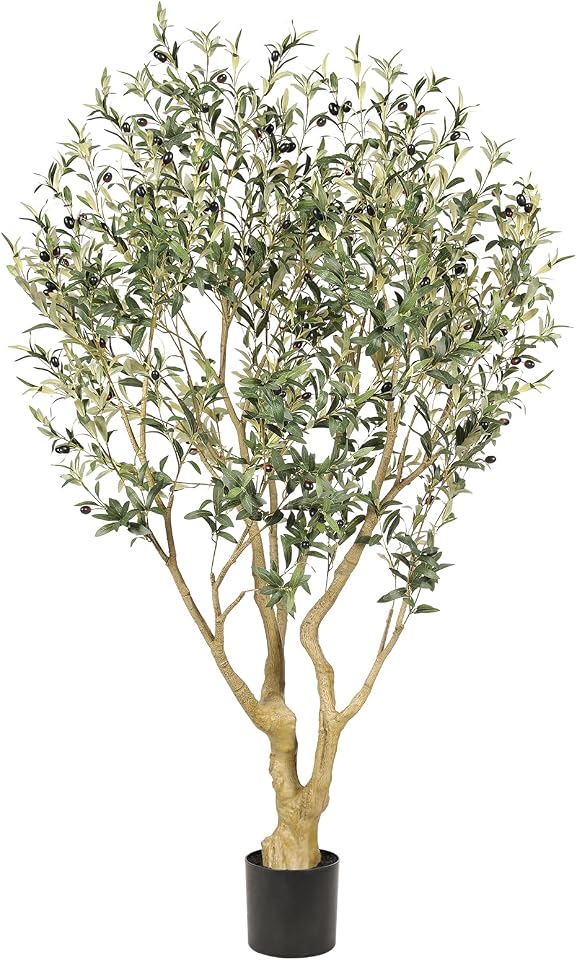
Faux Olive Tree (6 ft)
A tall olive tree that fills an empty corner and needs no care.
Affiliate link · we may earn a commission
One painted piece
Paint a piece of furniture instead of a wall: a thrifted nightstand, a small dresser, the back panel of a bookcase or a picture frame. A sample-size pot is often enough. Sand lightly, prime, then use two thin coats. You get the 2027 color in your home, and it moves with you.
The green-for-your-light cheat sheet
North: warm greens like celery or olive. South: anything, especially gray sage. East: judge it in the evening light you actually live in. West: sage or olive, since golden light pushes yellow-greens toward gold.
Sample 2 x 2 ft, check morning, midday and evening, then pair a warm white and the wood that matches the undertone.
Common mistakes to avoid
- Choosing under store lights. Paint aisles use bright, cool lighting. Always decide at home.
- Tiny swatches. Small samples look lighter and brighter than the finished wall. Go big.
- Gray sage in a dark north room. It can turn cold and flat. Choose a warmer green or bring in lots of warm wood.
- Mixing undertones. A yellow celery wall with blue-green pillows looks off. Keep greens in the same family.
- Cool bulbs. Bulbs at 4000K and above can make sage look gray and olive look muddy at night. Use 2700K in living rooms and bedrooms.
Green paint questions
What green paint is best for a north-facing room?
Greens with a warm undertone, such as yellow-leaning celery or brown-leaning olive. Gray sages can look cold in north light, so sample them large before you commit.
What is the difference between sage and olive green?
Sage leans gray and feels soft and airy. Olive leans brown or yellow and feels earthier and deeper. Sage suits Japandi and Scandinavian rooms; olive suits farmhouse and warm, layered rooms.
What white goes with sage green?
A soft white that is neither very yellow nor very blue. With warmer celery and olive, choose a creamy white. Test the white and the green together in your own light.
How can I add green to a rental without painting?
Use green curtains, a throw and pillows, add real or faux plants, and paint one piece of furniture you own. Put green in at least three places so it looks planned.
Next step
Find your style, then your green
Japandi or farmhouse? Take our style quiz to find the woods and textures that suit you, then browse budget finds to add green one piece at a time.
Planning a bedroom refresh? See how we used olive in our cozy olive green bedroom, or take the style quiz.
Was this story helpful?
Written by
Hemza
Founder & Editor
Founder of decorwithstyle. I style warm, lived-in rooms with natural wood, soft textiles and budget-friendly finds, and share the exact pieces behind every look.
More from HemzaKeep exploring