
In this story (6)
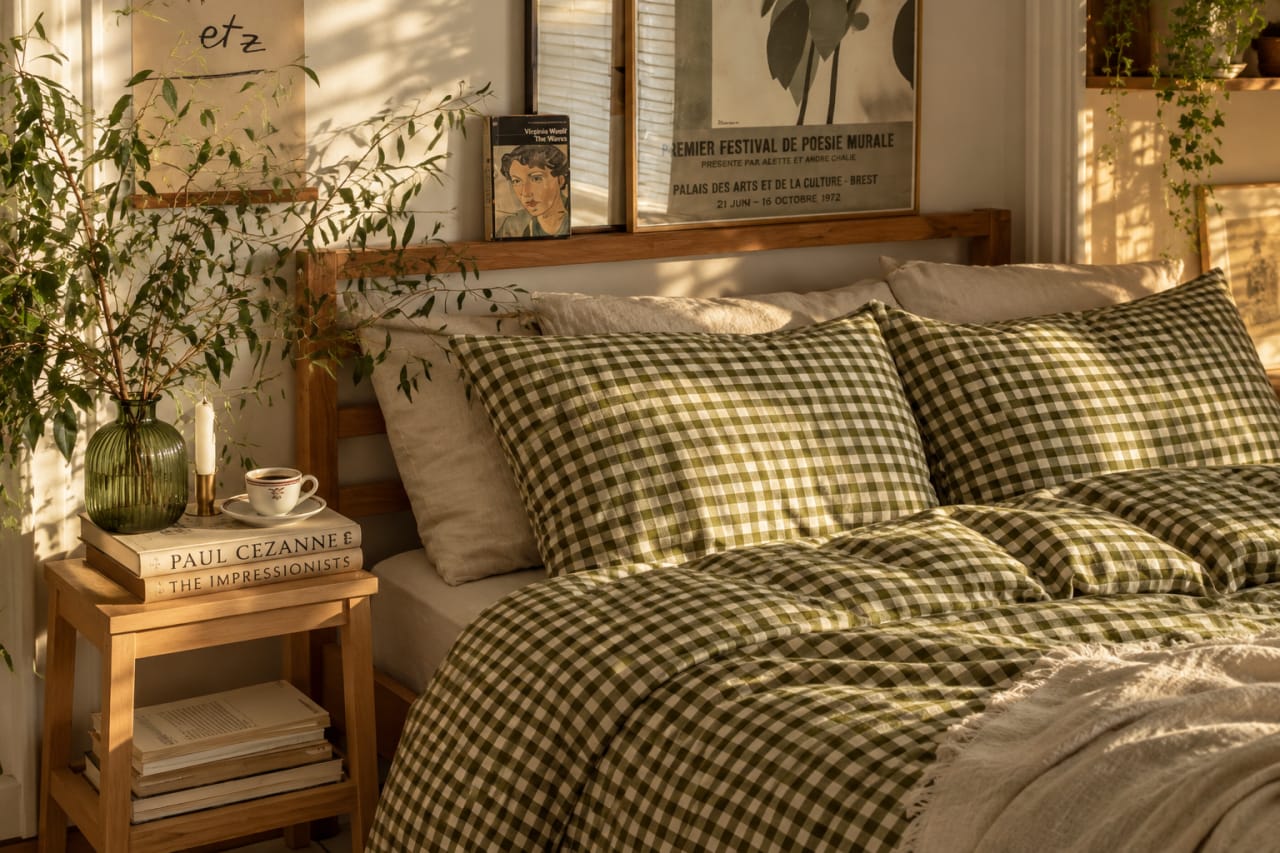
Some bedrooms look good in photos and feel like hotel rooms in person: everything white, everything new, nothing that says who sleeps there. This one goes the other way. It looks like it was put together slowly, by someone who reads in bed.
An olive green bedroom gets that feeling from four things working together: muted olive gingham on the bed, warm wood beside it, green glass with branches, and a couple of personal objects. Olive is calm like a neutral but warmer than grey, which is why it suits a room meant for winding down.
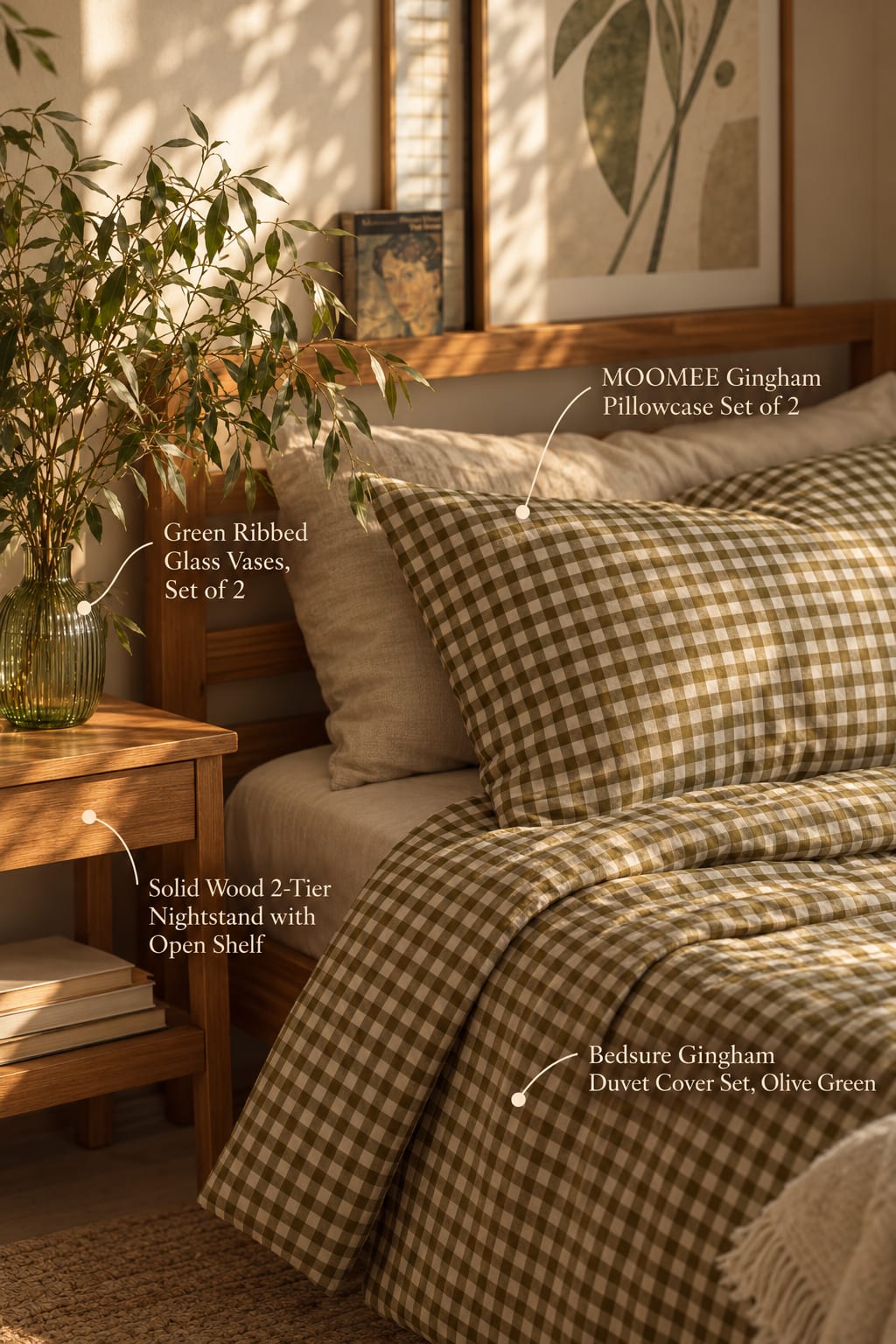
Here is the room from our pin, piece by piece: the four labeled pieces, why each one works, who should choose something else, and two finishing touches you probably already own.
1. Start with the bedding: olive gingham
The duvet is the biggest surface in the room, so it sets the mood. An olive and cream gingham does two things at once: the small check adds movement and a hint of countryside, while the muted olive keeps everything calm. A bright red or navy check would feel louder.
Make it work: keep the sheets plain in cream or oatmeal, and let the gingham be the only pattern on the bed.
Why this one: the check is small and the olive is muted, so it reads as texture from the doorway and pattern up close. Skip it if your walls or curtains already have a pattern; a solid olive duvet keeps the room from getting busy.

Olive Gingham Duvet Cover Set
The cottage-style duvet that sets a warm, relaxed mood on its own.
Affiliate link · we may earn a commission
2. Repeat the pattern on the front pillows
Matching gingham pillowcases on the front pillows make the bed look styled on purpose. Behind them, one or two plain pillows in a linen-look fabric give the eye a place to rest.
Washed cotton is a good choice here: it has the relaxed, slightly rumpled texture of linen and gets softer with washing.
Why match them: repeating the duvet's pattern on one pillow layer is what makes a bed look deliberate. Match it on more than one and it looks like a bed-in-a-bag.

Washed Cotton Gingham Pillowcases (Set of 2)
Gingham pillowcases that repeat the duvet's pattern for a finished, layered bed.
Affiliate link · we may earn a commission
3. Add warm wood beside the bed
Wood is what makes this look feel lived-in instead of catalogue-perfect. A simple two-tier nightstand gives you a top for the daily things (a cup, a candle, a plant) and an open shelf below for a stack of books.
Size check: a nightstand should sit roughly level with the top of your mattress. Measure before you buy, especially with a tall bed frame.
Why this one: solid wood with an open lower shelf, which keeps it light next to a full bed and gives books a home off the floor. Skip it if you need closed storage; a two-drawer nightstand hides more.

Solid Wood Two-Tier Nightstand
A warm, simple bedside table with room for a lamp, a book and a basket.
Affiliate link · we may earn a commission
4. Bring in something green
A few olive or eucalyptus branches in a ribbed green glass vase tie the room together: the glass picks up the olive of the bedding, and the branches add height and softness next to the bed. Fresh, dried or good faux stems all work.
If your vases come in a pair, put the second one on a dresser or windowsill so the green appears twice in the room. Repetition is what makes a color scheme feel planned.
Why ribbed glass: the ribs catch light and blur the stems, so even a few supermarket branches look full. Green glass also repeats the bedding without adding another fabric.

Green Ribbed Glass Bud Vases (Set of 2)
Ribbed green glass that turns a few branches into a styled arrangement.
Affiliate link · we may earn a commission
Finishing touches you already own
Two more details in the photo cost nothing new:
- A vintage book on the headboard shelf. A worn classic with a beautiful cover reads as personal, not decorative. Check your shelves or a secondhand shop before buying anything.
- A botanical art print above the bed. Soft greens and creams in a simple wood frame echo the bedding without competing with it. Lean it on a ledge so you can swap it with the seasons.
Add a cup for morning coffee on the nightstand and a soft throw at the foot of the bed, and the room is complete.
Olive changes with your light
Olive is one of the colors that shifts most through the day, so check your window before committing:
Painting the walls to match? Here is how to choose a green paint that looks right in north, south, east or west light.
- North-facing room (cool, even light): olive can turn grey-brown. Lean warmer: a yellow-olive, cream sheets, warm 2700K bulbs, more wood.
- South-facing room (warm, strong light): almost any olive looks good. You can go deeper and add a darker green throw.
- East or west: olive looks fresh in the morning or golden in the evening. Judge it at the time of day you actually use the room.
The quick test: put the bedding photo on your phone at full brightness next to your current sheets at night under your lamp. If the olive looks muddy there, pick the warmer option.
Olive is one of the big greens for 2027. Our 2027 colors of the year guide compares every brand's pick.
The color recipe
Olive for the bedding and greenery, warm oak for the furniture, and cream or oatmeal for sheets and walls. Keep metals to one warm finish, like brass, and use warm 2700K bulbs in the evening so the room keeps its golden glow after sunset.
Cozy bedroom questions
How do I make my bedroom cozy on a small budget?
Change what you touch and see most: the bedding, the pillows and the light. A patterned duvet cover, two pillowcases, warm bulbs and a few branches in a vase change the feel of a room far more than new furniture.
What colors go with olive green bedding?
Cream, oatmeal, warm white and natural wood are the easiest partners. For accents, try terracotta, rust or soft brass. Avoid cool grays, which can make olive look dull.
Is gingham bedding too busy for a bedroom?
Not if it is the only pattern. Keep the sheets, walls and curtains plain, and choose a muted color like olive so the check reads as texture rather than a loud print.
How should I style a nightstand?
Use three things at different heights: something tall (branches in a vase), something useful (a lamp or a cup), and something low (a book or a small tray). Keep the open shelf for books so the top stays uncluttered.
Start with the duvet. It's the biggest surface and the one that sets the color for everything else. Live with it for a week, then add the pillowcases and the green glass. Save the pin on Pinterest so you have the full room to work from.
Was this story helpful?
Written by
Hemza
Founder & Editor
Founder of decorwithstyle. I style warm, lived-in rooms with natural wood, soft textiles and budget-friendly finds, and share the exact pieces behind every look.
More from HemzaKeep exploring