
In this story (13)
- 01Furniture sizes for a small living room
- 021. Choose fewer, well-sized pieces
- 032. Use one bigger rug
- 043. Hang curtains high and wide
- 054. Add a large mirror
- 065. Keep the colors light and close
- 076. Light every corner
- 087. Hide the clutter
- 098. Go vertical
- 10How to make a small living room look bigger with curtains
- 11How to make a small living room look bigger with paint
- 12Small living room layout tips
- 13Small living room mistakes
The usual instinct in a small living room is to buy small: a little rug, a loveseat, a tiny side table for each corner, curtains that just cover the window. Each choice makes sense on its own. Together they chop the room into pieces, and a room in pieces looks smaller than it is.
How to make a small living room look bigger: use fewer, well-sized pieces on visible legs, one rug big enough for every front leg, curtains hung near the ceiling and past the window, a large mirror beside the light, walls and big furniture in close, light tones, light in every corner, and closed storage for the clutter.
Most of that runs against instinct, so the guide starts with sizes: what fits a 10 x 12 room, and the painter's-tape test that tells you before you buy.
Small living room cheat sheet
Furniture: fewer pieces, visible legs, a sofa about two-thirds the length of its wall. Rug: bigger, not smaller (front legs of every seat on it). Curtains: rod near the ceiling, panels to the floor, 8 to 12 inches past the window. Mirror: large, beside or opposite a window. Color: light walls, close tones, color in small things. Light: three sources, no dark corners.
Furniture sizes for a small living room
Most small-room mistakes are size mistakes. Measure before you buy, then aim for:
- Sofa: about two-thirds the length of its wall. In a 10 x 12 ft room, roughly 70 to 80 inches; under 75 inches is easiest. Apartment-size sofas are usually 72 to 84 inches.
- Coffee table: half to two-thirds the sofa length (a 72-inch sofa takes a 36 to 48 inch table), as high as the seat cushion or 1 to 2 inches lower. In tight rooms, a 30 to 36 inch round or a narrow 18 to 22 inch deep table.
- Distances: 14 to 18 inches from sofa to coffee table, 30 to 36 inches for walkways.
- Rug: 6 x 9 in very small rooms, 8 x 10 in most, always with the seats' front legs on it.
- Chairs: about 25 to 30 inches wide in a small room; one or two, not a second sofa.
Tape the outlines on the floor before buying: if you keep walking into the tape, the piece is too big.
1. Choose fewer, well-sized pieces
A small room filled with small furniture looks cluttered; a few well-sized pieces look calm. Choose one sofa that fits two-thirds of the wall, one or two chairs (swivel chairs work well), and skip the extra side tables and footstools.
Pick furniture with legs
Sofas, chairs and consoles raised on legs show the floor underneath, and more visible floor reads as more space. Skirted, boxy pieces that sit flat on the floor do the opposite.

The coffee table is where small rooms lose the most floor. Nesting tables solve it: together they're one compact table, and the smaller one slides out beside a chair when you have guests, which saves you a side table.
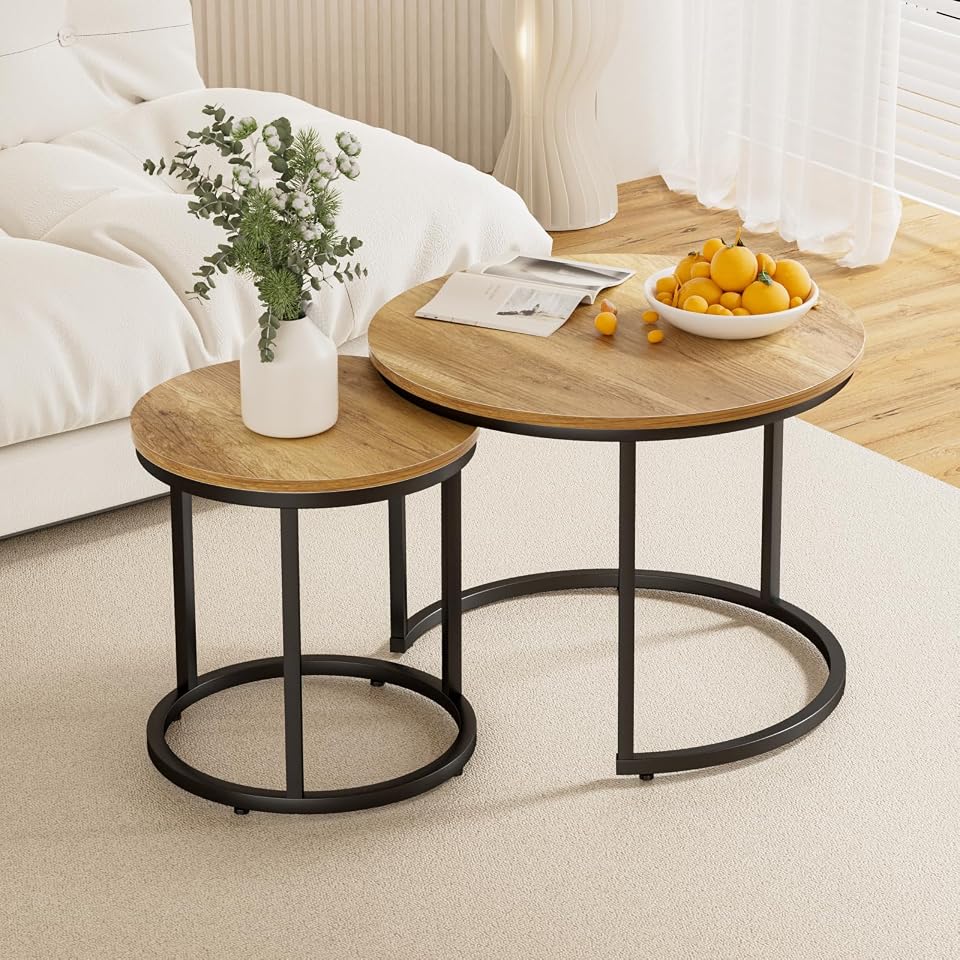
Round Nesting Coffee Tables (Set of 2)
Two nesting tables that slide apart for guests and tuck together to free up floor space.
Affiliate link · we may earn a commission
2. Use one bigger rug
A small rug chops a small floor into even smaller pieces. One rug large enough for the front legs of the sofa and chairs makes the seating area feel like one generous space. In most small living rooms that is still 8 x 10, or 6 x 9 in very small rooms. Pick a color a shade lighter or darker than the sofa so it reads as a separate layer: our rug color guide has pairings for every couch color.
A washable neutral 8 x 10 is the safe first rug here: light enough to open the floor, plain enough to work with whatever sofa you have, and washable because a small room's rug takes all the traffic.

Neutral Washable Area Rug (8 x 10)
A big, washable neutral rug that fixes the most common living room mistake.
Affiliate link · we may earn a commission
3. Hang curtains high and wide
Curtains hung right at the window frame make the window and ceiling look smaller. Mount the rod close to the ceiling, extend it 8 to 12 inches past the frame on each side, and choose panels that touch the floor. Light, linen-look curtains in the wall color are the most space-making choice.
Most store curtains are 84 inches, which is too short once the rod goes near the ceiling. Measure from the rod to the floor first; on most 8-foot ceilings you'll need 96-inch panels like these. Linen-look ivory lets daylight through and blends into a pale wall.

Ivory Linen Curtains (96 Inch, 2 Panels)
Floor-length linen curtains, long enough to hang high and still touch the floor.
Affiliate link · we may earn a commission
4. Add a large mirror
A big mirror beside or opposite a window doubles the light and the view. A tall floor mirror leaning against a wall also adds height. One large mirror does more than several small ones.

A tall arched floor mirror is the renter-friendly version: lean it beside the window, no drilling, and the arch adds a curve to a room that's usually all straight lines.

Arched Full-Length Floor Mirror
A tall arched mirror that bounces light around a small or dark room.
Affiliate link · we may earn a commission
5. Keep the colors light and close
Light walls reflect more light, and keeping the walls, curtains and big furniture in similar tones lets the edges of the room blur, so it reads as bigger. Put color and pattern in the small things (pillows, art, a throw) where they don't break up the space.
Exception: a small room painted one deep color from walls to trim can feel cozy and intentional instead of small. Just commit fully and light it well; our guide to making a living room cozy shows how to light and layer it.
6. Light every corner
Dark corners shrink a room. Use at least three light sources at different heights, and in a small room put some of them on the wall: plug-in sconces free up the floor and side tables.
Plug-in swing-arm sconces beside the sofa light the darkest corner and take a lamp off the side table at the same time. In a small room that's two things gone from the floor.

Dimmable Plug-In Swing Arm Wall Sconces (Set of 2)
Plug-in wall lamps that add warm light at eye level with no electrician, perfect for renters.
Affiliate link · we may earn a commission
7. Hide the clutter
Nothing makes a small room feel smaller than stuff everywhere. Give everything a closed home: a storage ottoman for throws and remotes, baskets on shelves, a console with doors. Leave a third of every surface empty.
A folding storage ottoman earns its floor space three ways: a footrest, extra seating and a box for throws, chargers and remotes. Skip it if you need a hard surface for drinks; put a tray on top or choose a lidded wood trunk.
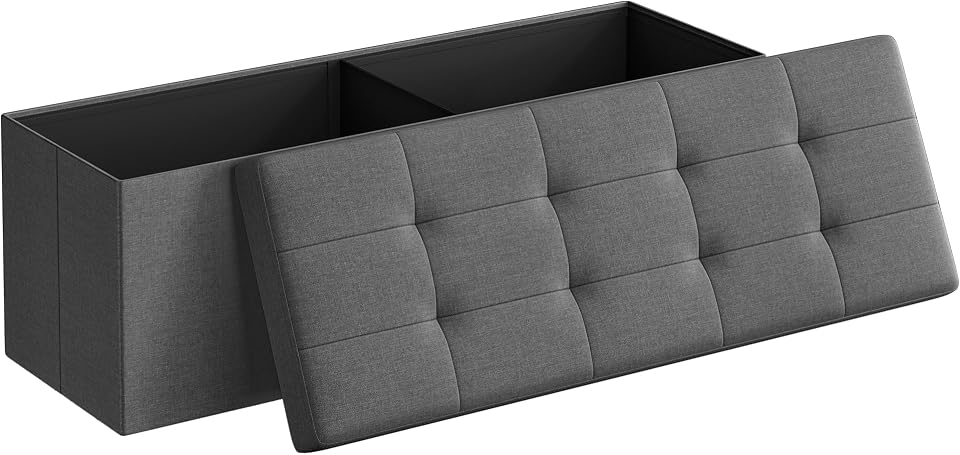
Folding Storage Ottoman Bench
Hidden storage for throws and remotes that doubles as extra seating.
Affiliate link · we may earn a commission
8. Go vertical
- Tall bookshelves or shelves up to the ceiling draw the eye upward.
- Art hung in a vertical arrangement above a sofa.
- A tall plant in one corner.
- Wall-mounted lamps and the TV to free the floor.
How to make a small living room look bigger with curtains
Quick answer: hang the rod near the ceiling and well past the window frame, choose floor-length panels in a light color close to the wall, and push them past the glass when open. The window looks bigger and the ceiling taller.
How to make a small living room look bigger with paint
- Light, warm whites and soft neutrals on the walls.
- Ceiling the same color or one shade lighter so there is no hard line.
- Trim in the wall color to blur the edges.
- Or color-drench in one mid or deep tone for a cozy, enveloping room.
Small living room layout tips
Put the sofa on the longest wall facing the focal point, use one or two chairs instead of a second sofa, choose a round or nesting coffee table and keep one clear walkway. Our furniture arrangement guide has a small-room layout.

Small living room mistakes
- Too many small pieces instead of a few larger ones.
- A tiny rug under the coffee table only.
- Curtains hung at the window frame.
- One overhead light and dark corners.
- Dark, heavy furniture that sits flat on the floor.
- Open shelves crammed full.
More fixes in our living room decorating mistakes guide.
Small living room questions
Can a dark color make a small room look bigger?
Not bigger, but it can make it look intentional. Paint walls, trim and ceiling in one deep shade so the corners blur, then light it warmly. A mid-tone with bright white trim is the version that shrinks a room.
What color makes a small living room look bigger?
Light, warm whites and soft neutrals, with the ceiling and trim close to the wall color. A single deep color on everything can also work for a cozy look.
Do mirrors make a room look bigger?
Yes, especially a large mirror beside or opposite a window, which reflects light and the view.
Should a small living room have a big rug?
Yes. A rug big enough for the front legs of every seat makes a small room feel larger than a small rug that floats in the middle.
Where should the sofa go in a small living room?
Usually on the longest wall, facing the focal point, with one or two chairs opposite.
What size sofa is best for a small living room?
About two-thirds the length of its wall: roughly 70 to 80 inches in a 10 x 12 ft room, ideally under 75 inches, on visible legs.
This weekend
Take one thing out
Remove the smallest piece of furniture in the room for a week: a side table, a footstool, a second chair. Most people don't put it back.
Was this story helpful?
Written by
Hemza
Founder & Editor
Founder of decorwithstyle. I style warm, lived-in rooms with natural wood, soft textiles and budget-friendly finds, and share the exact pieces behind every look.
More from HemzaKeep exploring